 Skip to content


frictional forces between two rolling friction wheels
| Code | TM260.01 |
Description:
- In bearing and drive technology, dynamic friction occurs at the sliding and rolling points, which leads to power losses in the technical systems.
- Dynamic friction is differentiated into sliding, rolling and spinning friction.
- In dynamic friction, there is relative translation between the two bodies.
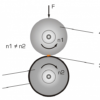
- Rolling friction occurs when two bodies roll on each other without sliding.
- In rolling friction, the rolling motion is superposed with a smaller sliding friction, known as slip.
- Rolling friction is therefore a combination of rolling and dynamic friction.
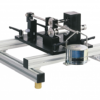
- The tribological system in TM 260.01allows a clear representation of the rolling friction and an analysis of the frictional forces.
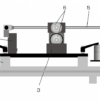
- The experimental unit comprises two friction wheels, pairing the materials aluminium and rubber at the contact points.
- The slip between the friction wheels is kept constant at 4% by a gear unit.
- The contact force can be adjusted gradually up to a maximum of 80 N by means of a lever.
- The experimental unit includes a tank that supplies lubricant.
- Different lubrication conditions can be studied, such as dry friction, water or oil lubrication.
- The TM 260drive unit is required in order to conduct experiments.
- The experimental unit is mounted quickly and easily on the frame of the drive unit with quick-action chucks.
- The driving wheel is driven by a clampable coupling between drive unit and gear unit.
- The display and control unit of the drive unit shows frictional force and speed and allows the continuous adjustment of the speed.
- The frictional force and the coefficient of friction can be determined in experiments.
- The frictional forces are measured by a force sensor.
Technical Details:
Specifications:
- frictional forces in two rolling friction wheels
- quick and easy assembly of the experimental unit on the frame of the drive unit
- driving wheel is driven by a clampable coupling between drive unit and gear unit
- slip between friction wheels kept constant at 4% by means of gear unit
- load on the friction wheels via lever arm and stepped weights
- friction wheels materials pair: aluminium/rubber
- use of different lubricants
- frictional force measured by force sensor
- displays of force and speed and speed adjustment on the drive unit
Technical Data:
- Load application device:
- load: 80N
- lever arm ratio: 2:1
- Friction wheels:
- Ø=49mm
- Ø=45mm, incl. rubber ring
- Gear ratio:
- i: 0,96, slip approx. 23%
- Force sensor for frictional force:
- 0…50N
- Weights:
- 1x 5N (hanger)
- 1x 5N
- 1x 10N
- 1x 20N
Dimensions & Weight:
- L x W x H: 480x250x150mm
- Weight: approx. 7kg
Learning Objectives/Experiments:
- together with the drive unit:
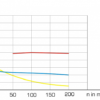
- determine the frictional forces as a function of load, lubrication and operating speed
- how slip affects the frictional force
- determine the coefficients of friction
Scope of Delivery:
- 1 experimental unit
- 2 friction wheels
- 1 set of weights
- 1 set of instructional material
Features:
- how slip affects the frictional force
- use of different lubricants possible
Accessories:
- Required:
- TM 260Drive unit for tribological investigations
Due to the continuous development of our products, the goods supplied may vary in detail to that illustrated on this Website.

