 Skip to content



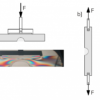
generate stress patterns with linear or circular polarised light in typical polycarbonate components
| Code | FL210 |
Description:
- Photoelasticity can be used to demonstrate stress profiles and stress concentrations in component models.
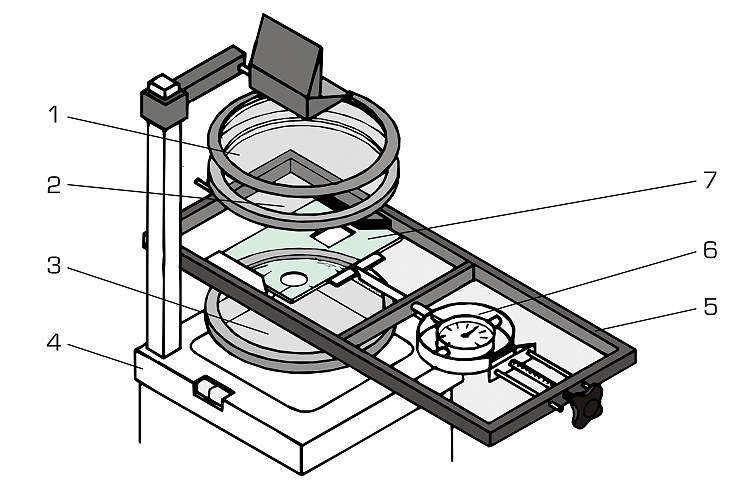
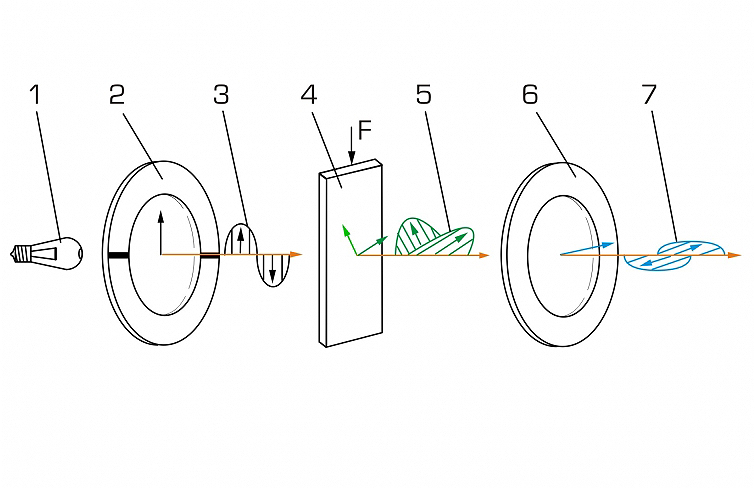
- The distribution of stress in plane, transparent bodies (plastic models) is investigated using polarised light.
- Polarising filters represent the stress profiles in colour.
- The notching and point loading and the criteria dictating component design are clearly visualised.
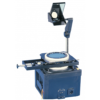
- The FL 210unit can be used with overhead projectors.
- Various transparent plastic models are mounted inside a frame.
- A load application device is used to apply pressure or tensile loads to the model under investigation through a spindle.
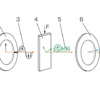
- An arrangement of polarising filters and quarter-wave filters generates either linear or circular polarised light.
- A green filter to generate monochromatic light is also part of the scope of delivery.
- The light source is an overhead projector (e.g., FL 210.01).
- The use of monochromatic light produces a system of dark and light stripes, which reflect the distribution and magnitude of mechanical stresses.
- The models which belong to the scope of delivery represent typical components, permitting experimentation in relation to notching and point loading.
- The stress profiles shown on the model are identical to those in real-world components.
- Additional models are also available to represent stress profiles in roller bearings, tooth flanks, screw connections and wrenches.
- All parts of the experiment are clearly laid out and securely housed in a storage system.
Technical Details:
Specification:
- photoelastic experiments with an overhead polariscope
- polariser and analyser each comprise a polarising filter and a quarter-wave filter
- filter enclosed, with stress-free glazing
- all filters arbitrarily rotatable in the horizontal plane
- linear or circular polarised light possible
- green filter for monochromatic light
- load application device with force gauge for pressure and tensile load
- eight different polycarbonate models are delivered
- storage system for parts
Technical Data:
- Filter bracket with polariser and analyser:
- diameter of filters: Ø 165mm
- 1 green filter, diameter: Ø 150mm
- Load application device with force gauge:
- load force: 0…250N
- 8 models, PC:
- unnotched bar
- bar with hole
- bar notched on one side
- bar notched on both sides
- rectangle without recesses
- rectangle with recesses
- fork
- crane hook
Dimensions & Weight:
- L x W x H: 500x190x30mm (frame)
- L x W x H: 280x280x90mm (filter bracket)
- Weight: approx. 8kg
- L x W x H: 1170x480x178mm (storage system)
Learning Objections/Experiments:
- generate plane stress states in various models under load
- compressive load
- tensile load
- investigate stress distributions with linear and circular polarised light
- interpret photoelastic fringe patterns
- stress distribution
- stress concentration
Scope of Delivery:
- 1 frame with load application device
- 1 filter bracket with polariser and analyser
- 1 green filter
- 8 photoelastic models
- 1 storage system with foam inlay
- 1 set of instructional material
Features:
- demonstration unit as an attachment for an overhead projector
- generate stress patterns with linear or circular polarised light in typical polycarbonate components
- detect stress concentrations
Accessories:
- Optional:
– FL 210.01 Overhead projector- FL 210.10 Model bolted connection– FL 210.11 Model roller bearing
– FL 210.12 Model wrench with counterpart
– FL 210.13 Model pinion
– WP 300.09 Laboratory trolley
Due to the continuous development of our products, the goods supplied may vary in detail to that illustrated on this Website.

