 Skip to content


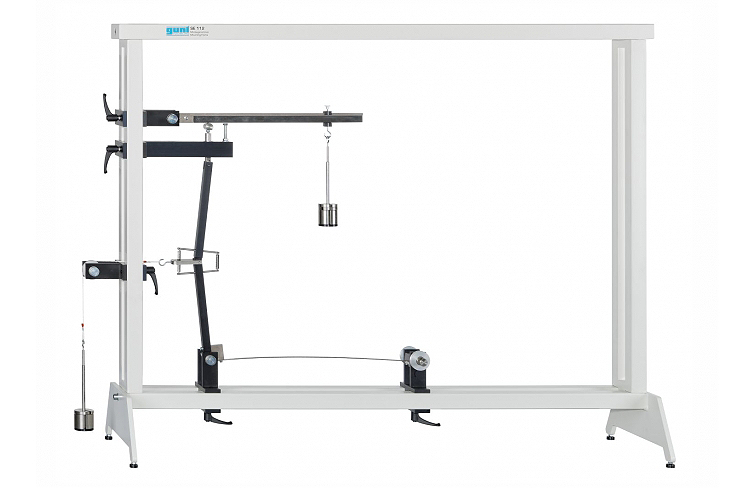
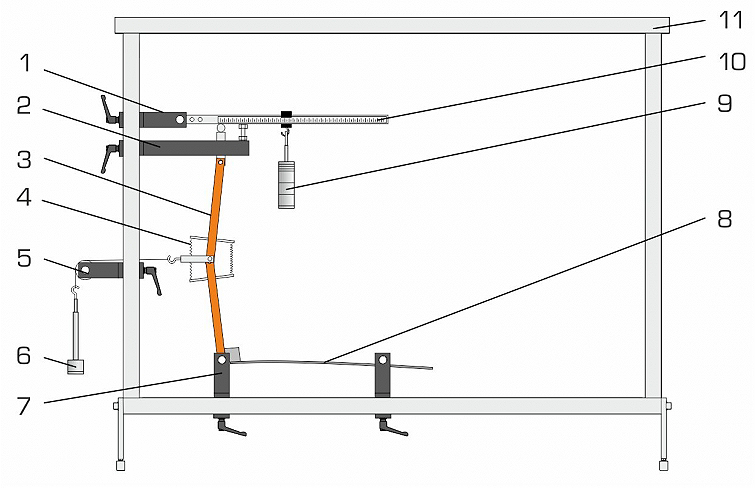

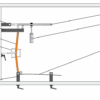
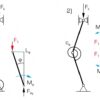
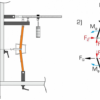
representation of simple stability problems on a buckling bar
| Code | SE110.19 |
Description:
- Buckling is a stability problem which occurs in practice when slim components are subjected to compressive loading.
- Following a “disturbance” to its equilibrium, such as caused by compressive loading, a stable system returns to equilibrium when the loading is removed.
- If the compressive load increases excessively, instability of the system results.
- The component buckles and fails.
- The critical compressive load at which the system becomes unstable is termed the buckling force.
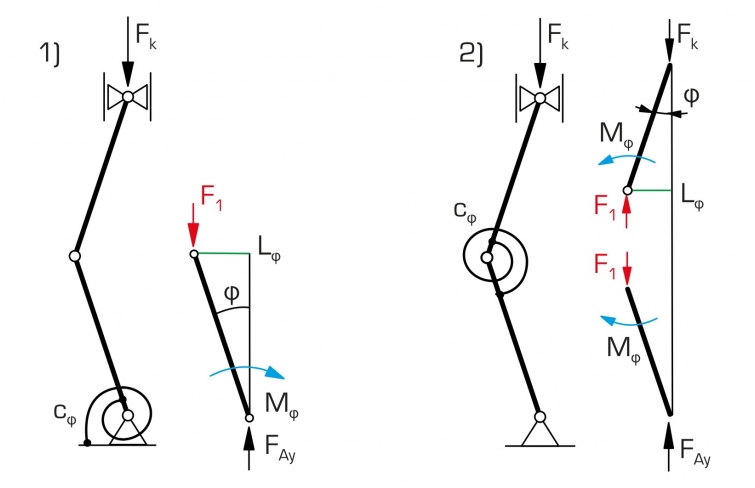
- A simple model for representing stability problems is a two-part bar with an elastic joint which remains stable up to a certain load level.
- If the buckling force is exceeded, the bar suddenly buckles and so becomes unstable.
- SE 110.19is used to investigate simple stability problems on a buckling bar under different conditions.
- The buckling bar is in two parts, with a central articulated joint.
- A compressive load is applied to the bar by a lever and weights.
- The continuously variable loading is determined precisely with the aid of a scale on the load application lever.
- Experiments can depict a variety of conditions, such as an elastic joint or an elastic clamp fixing.
- Two tension springs serve as the elastic joint. For the elastic clamp fixing option, a steel leaf spring is mounted in the bottom joint.
- The variable length of the leaf spring means various degrees of clamping are possible.
- The two cases can be combined.
- Another experiment demonstrates the influence of additional shear forces.
- It involves applying a shear force to the joint in the buckling bar with a cable and a weight.
- In all experiments the buckling bar is placed under load until it reaches an unstable situation.
- The length of the lever arm at which the buckling bar buckles is read from the scale and the buckling force is then determined.
- All the component elements of the experiment are clearly laid-out and housed securely in a storage system.
- The complete experimental setup is arranged in the frame SE 112.
Technical Details:
Specifications:
- investigation of the buckling load under different conditions (elastic joint, elastic fixed end)
- two-part buckling bar with central joint
- loading continuously variable with lever and weights
- determination of loading via scale on load application lever
- various degrees of clamping via leaf spring with variable length on bottom support
- thrust pad guided friction-free inside spherical shell
- low-friction joints with roller bearings
- device to generate shear forces
- storage system to house the components
- experimental setup in frame SE 112
Technical Data:
- Two-part buckling bar with central joint:
- WxH: 20x20mm
- length: 2x250mm
- support: pinned-pinned (articulated-articulated)
- Elastic joint:
- 2 tension springs, rigidity: 2N/mm
- lever arm: 50mm
- Elastic clamp fixing with steel leaf spring
- length: 500mm
- cross-section: 10x2mm
- second moment of area: 6,66mm4
- modulus of elasticity: 205000N/mm2
- Compressive force range: 25…120N
- Shear force: 0…20N
- Load application lever, lever ratio: 1:2…1:5
- Weights:
- 2x 1N (hanger)
- 8x 1N
- 6x 5N
Dimensions & Weight:
- L x W x H: 1170x480x178mm (storage system)
- Weight: approx. 28kg (total)
Learning Objectives/Experiments:
- determination of the buckling force for the case of an:
- elastic joint
- elastic fixed end support
- investigation of the buckling behaviour under the influence of:
- of additional shear forces
- of pre-deformation
Scope of delivery:
- 1 buckling bar, two-part
- 1 set of weights
- 4 supports
- 1 deflection roller
- 1 load application lever
- 1 leaf spring
- 2 tension springs
- 1 cord
- 1 hexagon socket wrench
- 1 storage system with foam inlay
- 1 set of instructional material
Features:
- determination of the buckling load under different conditions
- continuously variable load application on the buckling bar
Accessories:
- Required: SE 112 Mounting frame
Due to the continuous development of our products, the goods supplied may vary in detail to that illustrated on this Website.

