 Skip to content


record elevation curves of cam mechanisms
| Code | GL112 |
Description:
- Cam mechanisms play an important role in the conversion of rotary motion into oscillatory motion.
- The most common application of cam mechanisms is the activation of valves in engines.
- This application is highly dynamic: valves must be opened and closed in very quick succession.
- The contact between the valve and a cam must not be lost, otherwise it would result in uncontrolled oscillations, valve float and possible damage to the engine.
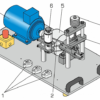
- The GL 112experimental unit allows the dynamic investigation of a cam mechanism at various speeds.
- Four typical cams with corresponding engaging members are compared in terms of their motion behaviour.
- The valve is simulated with a mass and a spring.
- By varying the spring stiffness, spring preload and oscillating mass, it is possible to study the dynamic limits of the respective cams.
- The cam motions and valve raising can be clearly demonstrated using a stroboscope (not included).
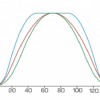
- A recorder synchronised with the cam member records the actual elevation curve of the cam mechanism.
- A speed-controlled drive motor with a large flywheel generates a speed as constant as possible.
- The open design means that the motion is clearly visible in every detail.
- A transparent protective cover ensures safe operation.
- The experimental unit is intended for demonstration in engineering education.
- It is not suitable to be used as a test bench in the field of endurance testing/tribology.
Technical Details:
Specification:
- investigation of cam mechanisms
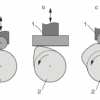
- cam-shaped cam members: tangent cam, hollow cam, 2 circular arm cams with different head radius
- 2 different engaging members: flat receiver with plunger or rolling receiver with plunger
- 3 interchangeable return springs and spring preload
- drive motor with variable speed
- oscillating mass can be increased with 5 additional weights
- mechanical drum recorder with nib and coated paper
- optical speed sensor
- transparent protective cover for safe operation
Technical Data:
- Drive motor
- DC asynchronous motor with frequency converter
- power: 250W
- speed: 60…670min-1
- Cam-shaped cam member
- stroke, each: 15mm
- opening angle, each: 140°
- Spring stiffness
- hard: 5026N/m
- medium: 2601N/m
- soft: 613N/m
- Masses
- additional weight: 200g
- plunger: 530g
- flat receiver: 93g
- rolling receiver: 20g
- Recorder: toothed belt drive
- 230V, 50Hz, 1 phase
- 230V, 60Hz, 1 phase; 120V, 60Hz, 1 phase
- UL/CSA optional
Dimensions & Weight:
- L x W x H: 800x440x440mm (experimental unit)
- Weight: approx. 40kg
- L x W x H: 360x320x160mm (display and control unit)
- Weight: approx. 5kg
Learning Objectives/Experiments:
- elevation curves in non-matching engaging member
- elevation curve in sprung-engaging member
- determine the limit speed and compare with theory
- influence of moving mass on the motion of cam member/plunger
- influence of return-spring stiffness and preload on the motion of cam member/plunger
- comparison of the elevation curves of different cam-member shapes
- comparison of elevation curves with theory
Scope of Delivery:
- 1 experimental unit
- 1 display and control unit
- 4 cam-shaped cam members
- 2 engaging members
- 3 return springs
- 3 blocks of recorder paper
- 1 set of tools
- 1 set of instructional material
Features:
- record elevation curves of cam mechanisms
- four different cam members, two different engaging members
- influence of spring stiffness and mass on the dynamic behaviour
Accessories:
- Optional:
- WP 300.09 Laboratory trolley
Due to the continuous development of our products, the goods supplied may vary in detail to that illustrated on this Website.

