 Skip to content


slip–stick phenomenon at the transition from static to dynamic friction
| Code | TM260.04 |
Description:
- Friction is the resistance of a body against movement on a base.
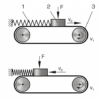
- Static friction means that a body remains at rest under the action of a force.
- If a limit value is exceeded, the body begins to move on the base, resulting in dynamic friction.
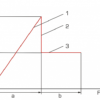
- Self-excited friction oscillations, also known as slip–stick phenomenon, occur if the static friction is significantly higher than the dynamic friction.
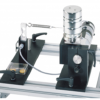
- The tribological system in TM 260.04allows a clear demonstration of the transition from static to dynamic friction and the occurrence of friction oscillations.
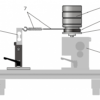
- The experimental unit contains a rotating stainless-steel disk and a loosely fitting friction ring as the friction pair.
- The contact force between the friction partners can be adjusted gradually up to a maximum of 40 N by means of weights.
- A tension spring prevents the friction ring from rotating.
- The necessary holding force is measured by a force sensor.
- The TM 260drive unit is required in order to conduct experiments.
- The experimental unit is mounted quickly and easily on the frame of the drive unit with quick-action chucks.
- The disk is driven by a clampable coupling between drive unit and gear unit.
- The display and control unit of the drive unit shows frictional force and speed and allows the continuous adjustment of the speed.
- The frictional force and the coefficient of friction can be determined in experiments.
- The frictional forces are measured by a force sensor.
- Friction rings made of different materials are included in the scope of delivery to study different friction pairings.
Technical Details:
Specifications:
- friction oscillations at static and dynamic friction
- quick and easy assembly of the experimental unit on the frame of the drive unit
- rotating stainless steel disk
- disk is driven by a clampable coupling between drive unit and gear unit
- friction ring of different materials: stainless steel, brass or plastic (PA)
- friction pair subject to load by stepped weights
- frictional force measured by force sensor
- displays of force and speed and speed adjustment on the drive unit
Technical Data:
- Disk:
- Ø: 60mm
- stainless steel
- Friction ring:
- outer diameter: 80mm
- inner diameter: 50mm
- 1x stainless steel
- 1x brass
- 1x plastic (PA)
- Force sensor for frictional force:
- 0…50N
- Weights:
- 1x 5N
- 3x 10N
Dimensions & Weight:
- Weight: approx. 7kg
Learning Objectives/Experiments:
- together with the drive unit:
- observation of the transition from static to dynamic friction
- influence of lubrication on slip–stick phenomenon
- influence of the force between the friction partners on the slip–stick phenomenon
- influence of the relative velocity of the friction partners on the slip–stick phenomenon
Scope of Delivery:
- 1 experimental unit
- 1 disk
- 1 friction ring
- 1 spring
- 1 set of weights
- 1 set of instructional material
Features:
- slip–stick phenomenon at the transition from static to dynamic friction
- friction rings of different materials for the study of different friction pairings
Accessories:
- Required:
- TM 260Drive unit for tribological investigations
Due to the continuous development of our products, the goods supplied may vary in detail to that illustrated on this Website.

