 Skip to content


principles of corrosion and corrosion protection on metallic materials
| Code | CE105 |
Description:
- Corrosion damage to metallic components causes considerable economic and technical damages.
- The issue of corrosion and corrosion protection therefore plays an important role in technical training.
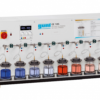
- The CE 105allows a variety of factors that influence corrosion processes to be investigated in parallel.
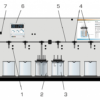
- Eight glass vessels are available to do this.
- They allow different materials to be compared under different conditions.
- The required electrolyte solution is added to the vessels.
- Up to six specimens can be attached to the cover of each vessel and these are immersed in the solution.
- It is possible to connect specimens to an electrical conductor to investigate local elements and the principle of sacrificial anodes.
- An adjustable power pack allows an external voltage to be connected.
- This counters the current flow between precious and base metals in local elements.
- As result the corrosion rate of the baser metal is reduced.
- A diaphragm pump conveys ambient air into the electrolyte solution as required.
- Flow control valves can be used to individually adjust the gas flow rate for each vessel.
- It is also possible to feed other gases provided by the laboratory into the electrolyte solution.
- A pH meter is included to allow the influence of the electrolyte solution on corrosion processes to be investigated and compared.
Technical Details:
Specifications:
- investigation of corrosion and corrosion protection measures
- 8 electrolyte vessels with covers and 6 specimen holders each
- adjustable power pack for application of external voltage
- air supply via diaphragm pump
- reversing valve for air or external gas supply
- adjustment of gas flow rate for each vessel using flow control valves
- recording of pH value of electrolyte solutions using manual unit
- pressure range for external gas supply: 0,2…1,0 bar
Technical Data:
- Electrolyte vessels:
- capacity: 1000Ml
- material: glass
- Power pack:
- voltage: 0…30VDC
- current: 0…5A
- Diaphragm pump: approx. 260L/h
- Specimens:
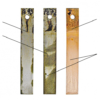
- 6x stainless steel, steel, copper, brass, aluminium
- 3x glass
- dimensions: 100x15x1mm
- Measuring ranges
- pH value: 0…14:
- : 0,01
- 230V, 50Hz, 1 phase
- 230V, 60Hz, 1 phase; 120V, 60Hz, 1 phase
- UL/CSA optional
Dimensions & Weight:
- L x W x H: 1280x460x630mm (experimental unit)
- Weight: approx. 55kg
- L x W x H: 730x480x240mm (storage system)
- Weight: approx. 15kg
Learning Objectives/Experiments:
- corrosion behaviour of different metallic materials (rust / passivation)
- formation of local elements
- influence of pH value of the electrolyte solution
- influence of salt concentration in the electrolyte solution
- oxygen corrosion
- corrosion protection:
- external voltage
- sacrificial anodes
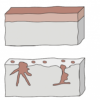
- protective layers
Scope of Delivery:
- 1 experimental unit
- 1 pH meter
- 1 set of specimens
- 1 set of cables
- 1 coupling to connect an external gas supply
- 1 storage system
- 1 set of instructional material
Features:
- oxygen corrosion
- electrochemical corrosion (local elements)
- corrosion protection with external voltage and sacrificial anodes
Accessories:
- optional:
- WP 300.09Laboratory trolley
Due to the continuous development of our products, the goods supplied may vary in detail to that illustrated on this Website.

